Neqet Yukaatkut. Niiciki Qanemciput.
We are Salmon People. Hear our stories.
The multi-year collapse of Yukon River Chinook and chum salmon is a humanitarian crisis.
Consecutive years of restrictions and complete closures to salmon fishing affect how we feed our families, teach our children, and practice our culture:
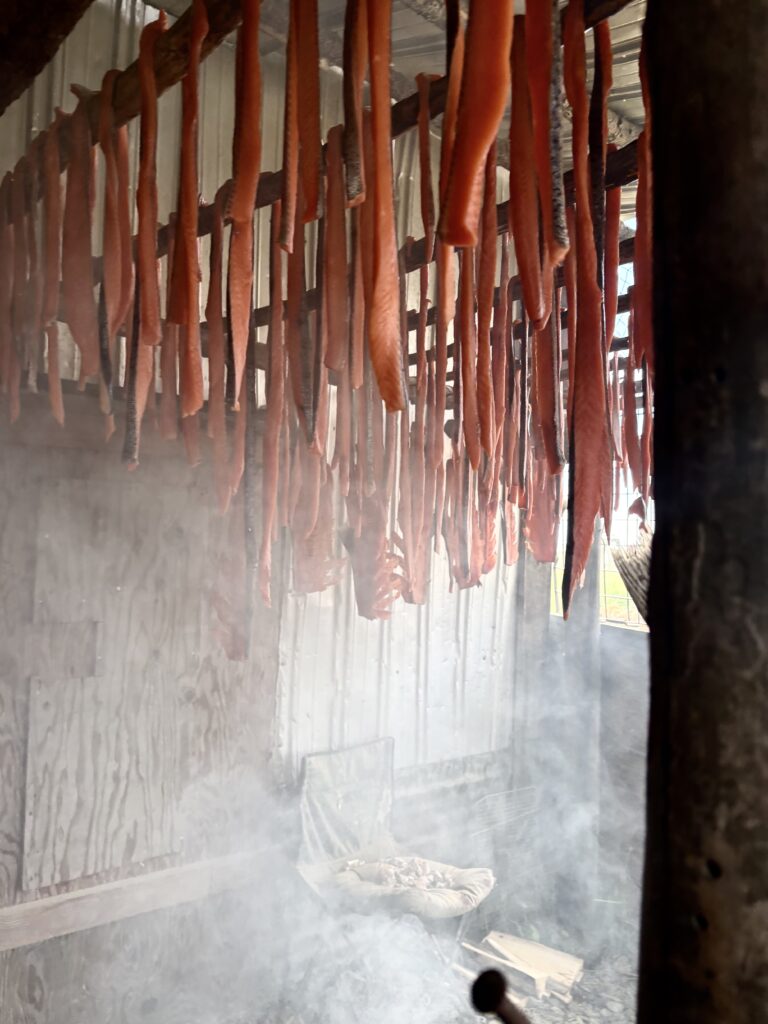
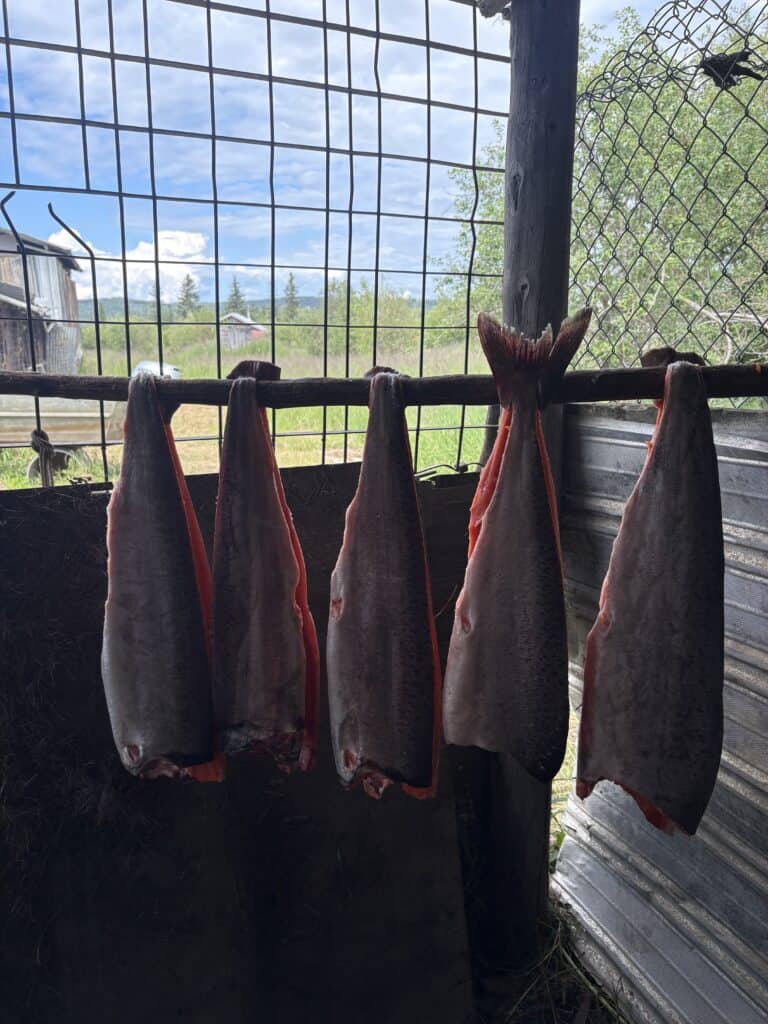
- Alaska Native youth are unable to practice traditional techniques of filleting, smoking, and sharing fish.
- Alaska Native Elders are being denied the opportunity to pass down their knowledge through culturally relevant teachings.
- Diabetes and pre-diabetes diagnoses are soaring as people turn to processed store-bought food to survive.
- Wallets and bank accounts run dry without the income buffer from family-owned commercial fishing.
- Bears and eagles roam scrawny and hungry without a key source of food, indicating broad ecosystem impacts that affect subsistence.
- Depression and anxiety run rampant, especially during the summertime, when our minds and bodies are craving fish camp.
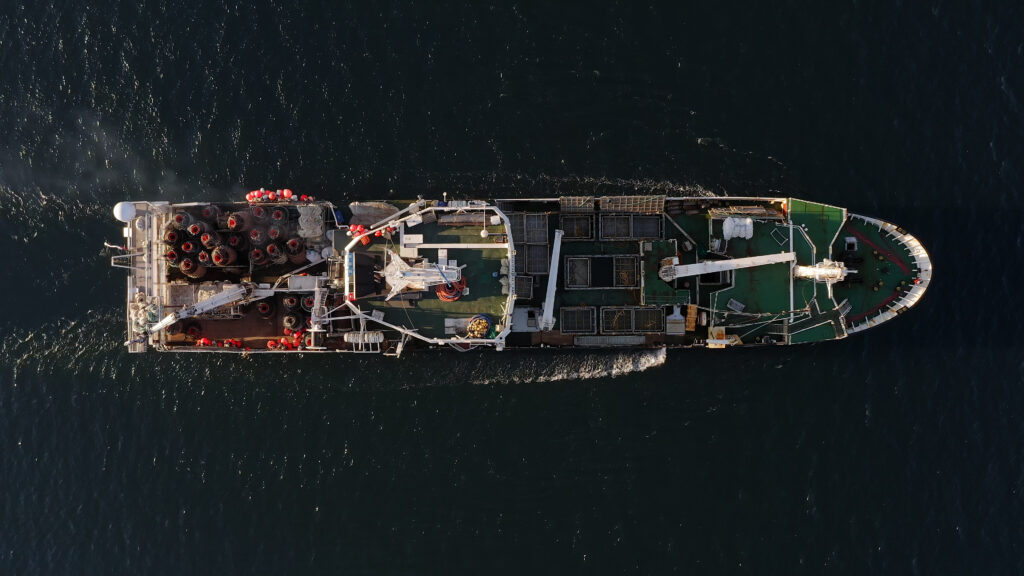
While our Yukon River communities are forced to sacrifice Our Ways of Life, unable to bring our salmon home, industrial trawl fishing continues at full scale in the Bering Sea.
Trawl nets cause substantial harm. They are huge — many of them are wide enough to fit several Boeing 737 jets inside them — and they unselectively ensnare marine creatures of all kinds, including juvenile Yukon River Chinook and chum salmon.
Before these salmon are given a chance to eat, grow, and find their way upstream, trawl nets fishing for pollock and other marine fish snatch them up. Over the past 15 years alone, hundreds of thousands of Chinook and chum salmon from Western and Interior Alaska — including from the Yukon — have been prematurely killed by industrial trawlers.
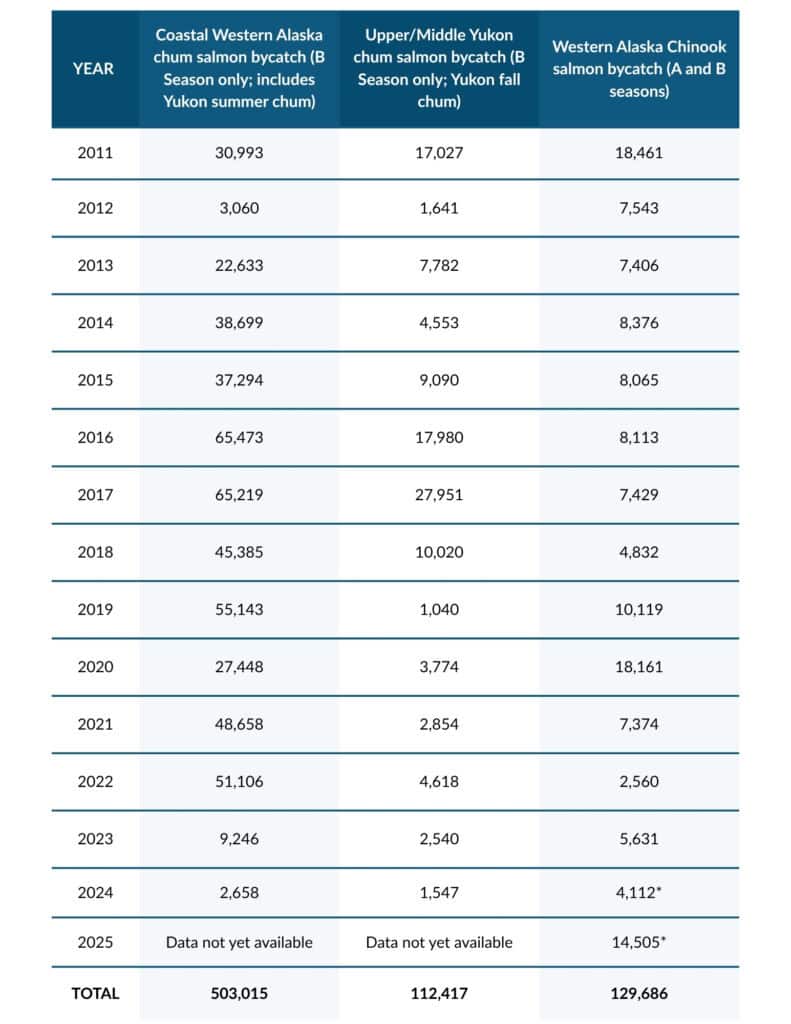
*Note: New genetic baselines used to determine 2024 and 2025 Chinook bycatch stock of origin distinguish Yukon Chinook salmon from other river systems. In 2024, the Yukon Chinook bycatch was 86 (primarily from the Canadian side); in 2025, it was 1,444 (primarily from the Alaskan side).
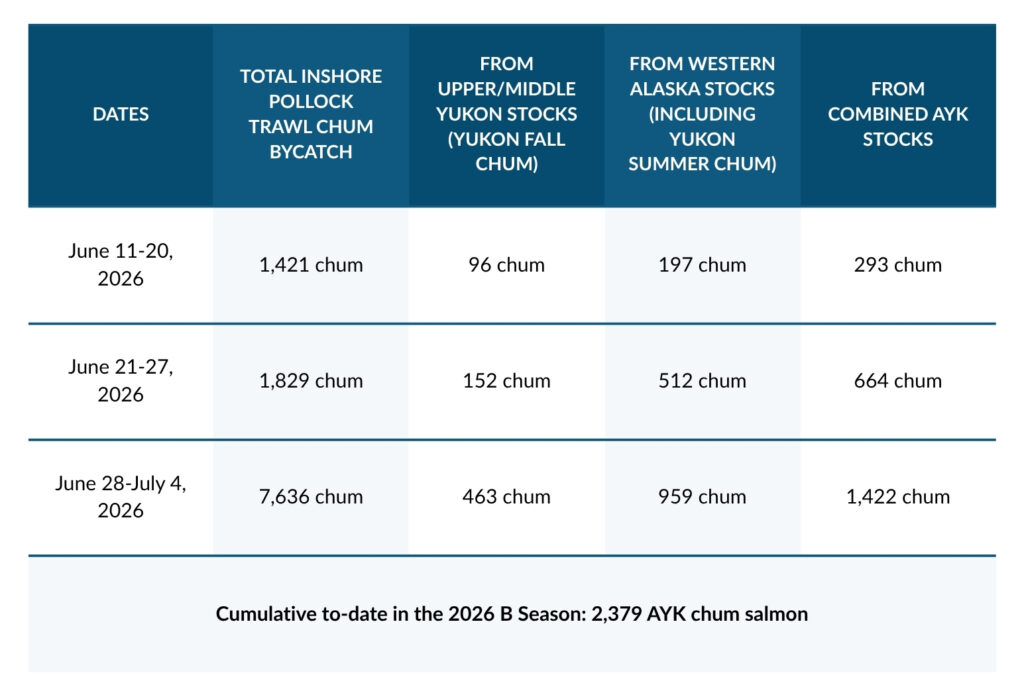
Already this year, inshore pollock trawl vessels have taken at least 200 Yukon fall chum salmon and 700 Western Alaska chum salmon (which includes Yukon summer chum stocks) from the Bering Sea — a number that we expect will keep climbing as the B season progresses.
Meanwhile, Yukon River subsistence users have been heavily restricted or completely barred from harvesting these fish.
Science published by federal and state agencies point to climate change as the main cause of salmon declines, but we believe other factors — especially bycatch — must also be addressed. For instance, recent research into Yukon Chinook salmon declines led by NOAA’s Alaska Fisheries Science Center claim to have “found no evidence that harvest of adult salmon or bycatch removals prior to spawning have been significant factors in population level declines of Yukon River Chinook salmon.”
It’s true that climate change is a significant threat to Yukon salmon — but it is only the tip of the iceberg. The methods behind this finding do not account for:
- Traditional Knowledge that the wasting of salmon — as is done in trawl bycatch — contributes to their disappearance.
- The impacts that decades of bycatch by the pollock trawl fleet, especially before caps were instituted in 2011, have on the long-term reproduction and sustainability of salmon.
- The reproductive value of a single salmon, especially a large and old one.
- The state of Yukon River Chinook salmon as overfished — and the magnified impact of continued trawl bycatch on overfished stocks.
- Damage by trawl nets to seafloor habitat and the marine ecosystem, and how that negatively impacts our salmon’s ocean home.
- The effects of removing millions of cumulative tons of biomass in trawl fisheries over decades.
Moreover, the injustice of salmon bycatch and the destruction of marine ecosystems by trawling doesn’t cause outrage among federal and state regulators. In fact, it is endorsed by managers as part of the cost of doing business as a trawler.
“It’s also moving to be reminded of the socioeconomic benefits of the pollock fishery. I haven’t heard anyone question the seriousness of the salmon crisis in Western Alaska, but clearly there are differences of opinion over the extent to which reducing bycatch may help salmon runs to recover. The science is clear that unfavorable ocean conditions, rather than bycatch, are the dominant forces affecting salmon returns.” — Jon Kurland, NOAA Alaska Regional Office Administrator & NPFMC member, February 11, 2026 (4:06:28-4:07:28)
“Especially in the Bering Sea, [pelagic trawl gears] need to be a lot closer to the bottom in order to have high CPUE in order to be done with your fishing and get off the water faster, so you can try to mitigate all these other impacts that we’re trying to mitigate.”
— Nicole Kimball, NPFMC member, June 8, 2026 (9:40:55-9:41:05)
In cases of other population collapses, managers take action to reduce harvest. Yet, in the case of Yukon and other Western Alaska salmon collapses, federal and state managers permit, and even institutionalize, the overharvest of these fish.
Unsurprisingly, the trawl fleet corroborates –– and perhaps utilizes its political power to provide –– these statements.
Researchers, marine managers, and the industry are working together to minimize the impacts of industrial fishing on our salmon and point fingers at climate change. Commercial harvest remains the priority over subsistence and sustaining salmon.
The cumulative effects of trawling and bycatch from industrial fisheries, alongside climate change, rampant hatchery salmon releases, and unsustainable salmon management, are leading to the collapse of Yukon River ecosystems and traditional ways of life.
Something has to give –– and that something cannot be the existence of Yukon River Salmon People.
This is Part 2 of a 3-part series on the Yukon River salmon collapse.