Neqet Yukaatkut. Niiciki Qanemciput.
We are Salmon People. Hear our stories.
Trawling is contributing to declines of salmon, crab, marine mammals, and Alaska Native community well-being, and to the reduction of the resilience and biodiversity of the North Pacific marine ecosystem.
This is something our Salmon People know and have spoken to time and time again.
Here are the top 10 things you should know about trawling.
Download the Fact SheetSIZING UP TRAWL NETS
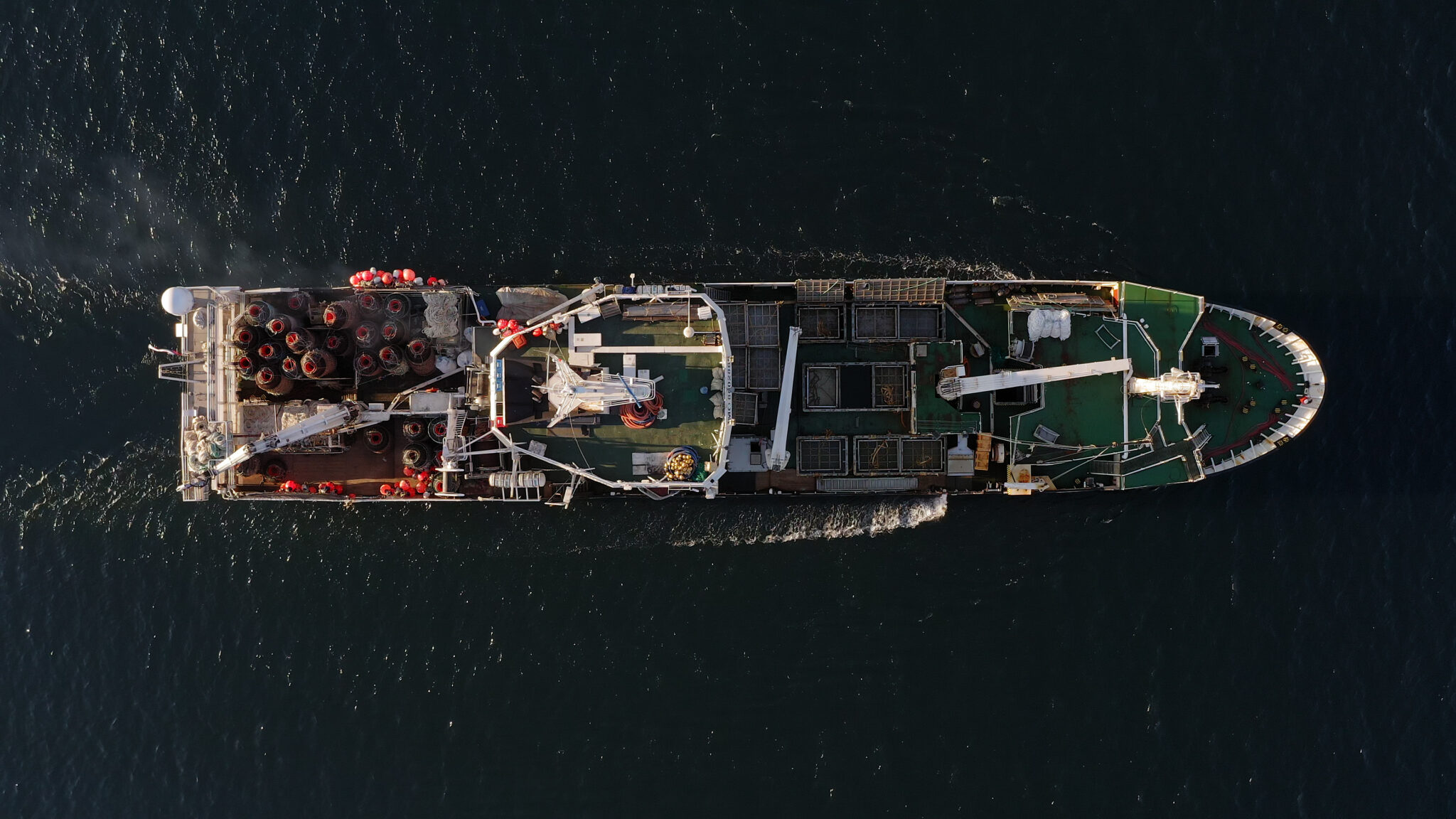
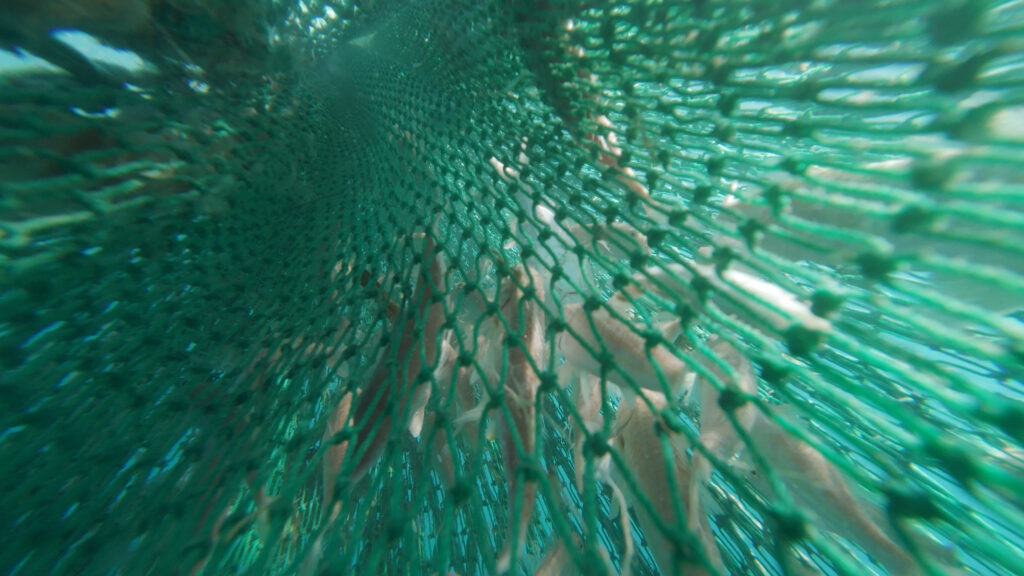
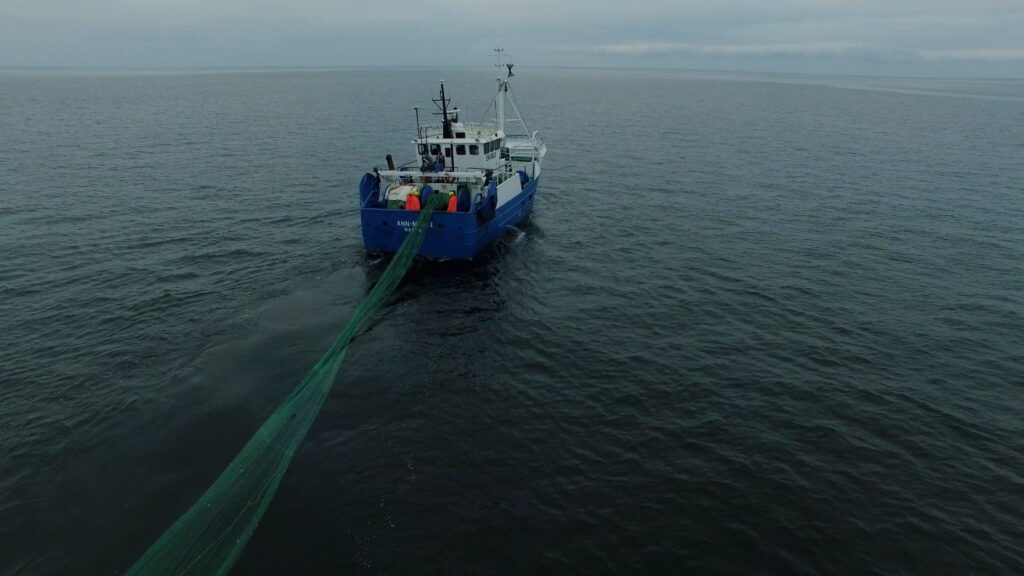
- “Pelagic” pollock trawl fisheries cover a lot of ground in Alaska. Vessels are equipped with massive trawl nets, with footropes that are 2-inch thick weighted chains on the bottom front of the gear and can be up to 1,475 feet long (five football fields). Pelagic trawl nets can have an opening as large as 180 feet deep and 590 feet wide, easily swallowing four Boeing 747 jets, stacked two across and two high (NPFMC 2025). Bottom trawl gear in Alaska is also massive. This gear that drags along the ocean floor uses heavy steel trawl doors spanning over 650 feet wide. The rigging between the net and the doors, which disturbs and directs fish into the path of the trawl, can extend up to 1,312 feet long (NPFMC 2012).
DAMAGE TO THE SEAFLOOR
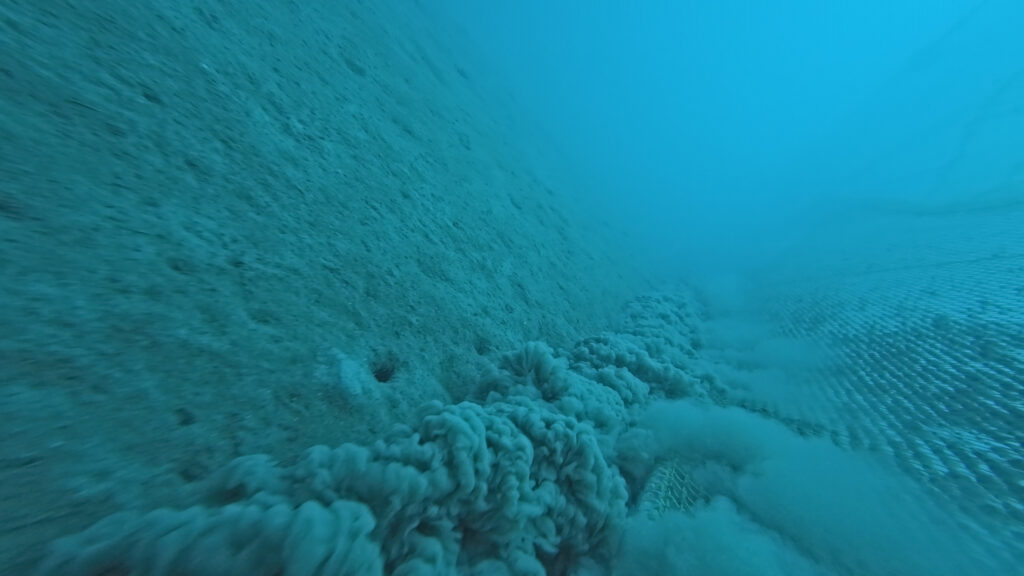
- Despite being called “pelagic” or “midwater,” the pollock trawl fleet accounts for roughly 40% of all seafloor contact in the Eastern Bering Sea (Zaleski et al. 2022).
- Scale matters when you talk about trawling in Alaska. Bottom and pelagic trawl fisheries are responsible for 97% of all seafloor contact and habitat disturbance in Alaska, with a combined footprint of 265,666 square miles –– roughly the size of Texas (Zaleski et al. 2022, Table 1, p. 20).
LEADING CAUSE OF BYCATCH
- Trawl fleets are responsible for the vast majority of bycatch of prohibited species in the Bering Sea. In 2024 the trawl fishery was responsible for all herring bycatch, 99.7% of Chinook salmon bycatch, 99.7% of chum bycatch, 90% of halibut bycatch, 85% of tanner crab bycatch, and 40% of red king crab bycatch in the Bering Sea (2025 NOAA Econ SAFE).
WASTEFUL KILLING
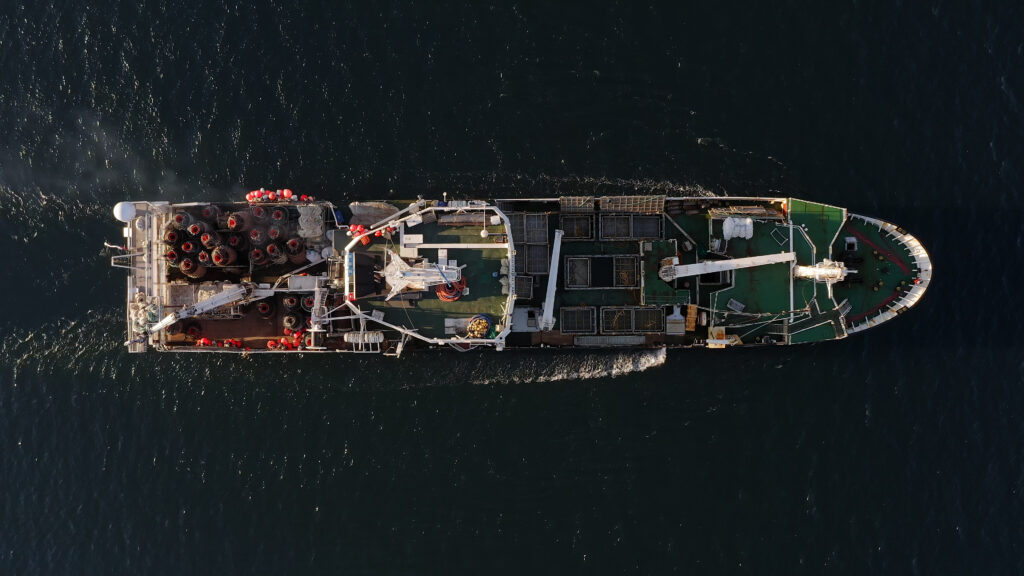
- From 2020–2024, trawlers in Alaska discarded 396 million pounds (179,600 metric tons) of groundfish bycatch — roughly equivalent to 400 fully loaded Boeing 747 aircraft, or 1.05 billion six-ounce servings of seafood (2025 NOAA Econ SAFE).
- Genetic studies conducted by NOAA Fisheries’ Alaska Fisheries Science Center document that since 2011, Bering Sea pollock trawlers have killed over 132,600 Chinook salmon and 615,100 chum salmon from the Yukon, Kuskokwim, and other Western Alaska rivers as bycatch –– wasting precious fish that will never get the opportunity to feed Alaska Native families and restore abundance to river systems. Had these salmon been caught by subsistence fishers instead of killed at sea, they could have provided over 18.4 million six-ounce servings of fish to families.
UNSUSTAINABLE BIOMASS REMOVALS
- Pollock trawling has been fundamentally reshaping the Bering Sea ecosystem by modifying a specific part of the food web. Since 2000, over 70 billion pounds of pollock (equating to about 32 million metric tons, or 71,000 fully loaded Boeing 747 aircraft) have been removed from the Bering Sea (NOAA 2026), directly impacting the food resources and reproductive success of top predators like Northern fur seals on the Pribilof Islands (Short et al. 2021).
ECONOMIC VACUUM FOR ALASKA
- Trawl money does not fairly support Alaska’s rural and coastal fishing communities, despite Community Development Quota program claims. 71% of labor income, 62% of jobs, and roughly two-thirds of total economic output produced by the pollock fishery leaves Alaska (AMCC & OC 2026).
INEQUITY AND SELF-MANAGEMENT
- Major decisions, management and oversight of trawling and bycatch is primarily led by the trawl industry itself. Of the 11 voting seats on the North Pacific Fishery Management Council, four are held by state and federal agency representatives who prioritize industrial trawling of Alaska fishing and subsistence communities; three seats are held by employees of organizations reliant on trawling; and zero seats are appointed by federally recognized Tribal governments of the AYK region, whose communities in times of uncertainty are most directly impacted. Since 2010 and the development of the Incentive Plan Agreement (IPA) program, salmon bycatch management has increasingly been codified as the responsibility of the pollock trawl fleet to self-manage (50 CFR 679.21(f)(12)).
UNLEASHING CRITICAL CARBON SINKS
- Marine seafloor sediments provide long-term carbon storage. Bottom trawling stirs up sediment and resuspends carbon in the seafloor, over half of which may eventually get released back into the atmosphere within about a decade, compounding climate change effects. It’s estimated that up to 370 million metric tons of carbon dioxide are released globally every year because of bottom trawling (Atwood et al. 2024).
Help our Salmon People spread awareness about the devastating impacts of trawling in Alaska.
Donate Now