Neqet yukaatkut. Niiciki qanemciput.
We are Salmon People. Hear our stories.
For many Alaskans, summer is the season of abundance. The land is lush and vibrant, the air chirps with birdsong, and the rivers and lakes teem with fish to be harvested –– and there is no fish more vital to Alaskan summers than salmon.
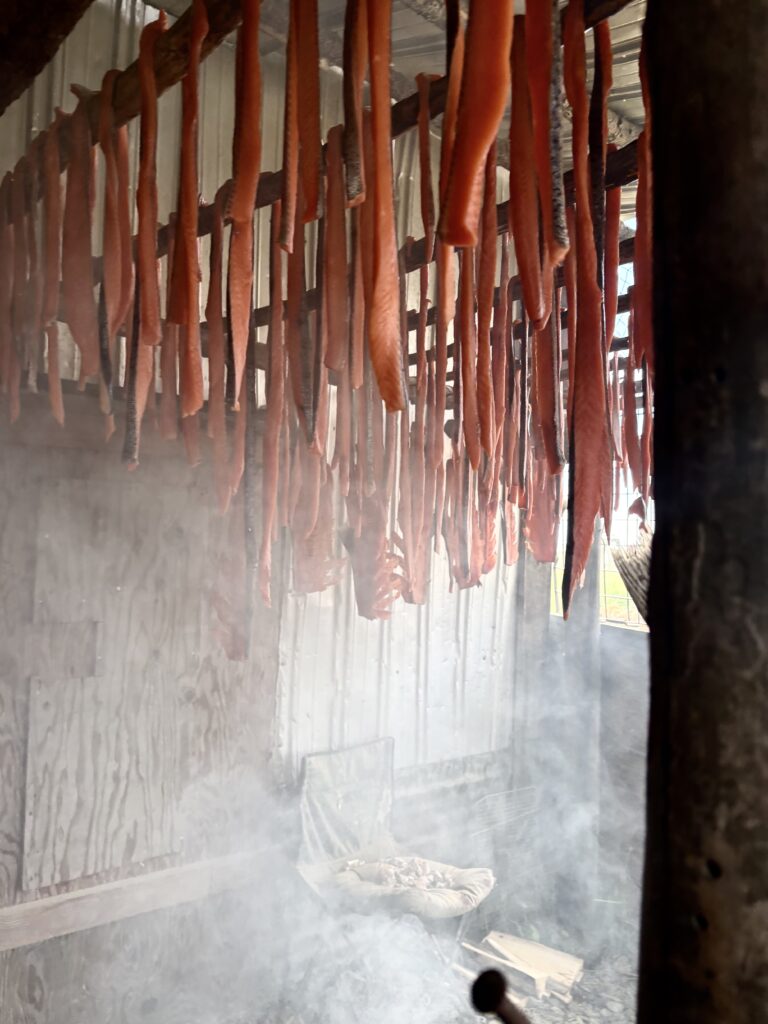
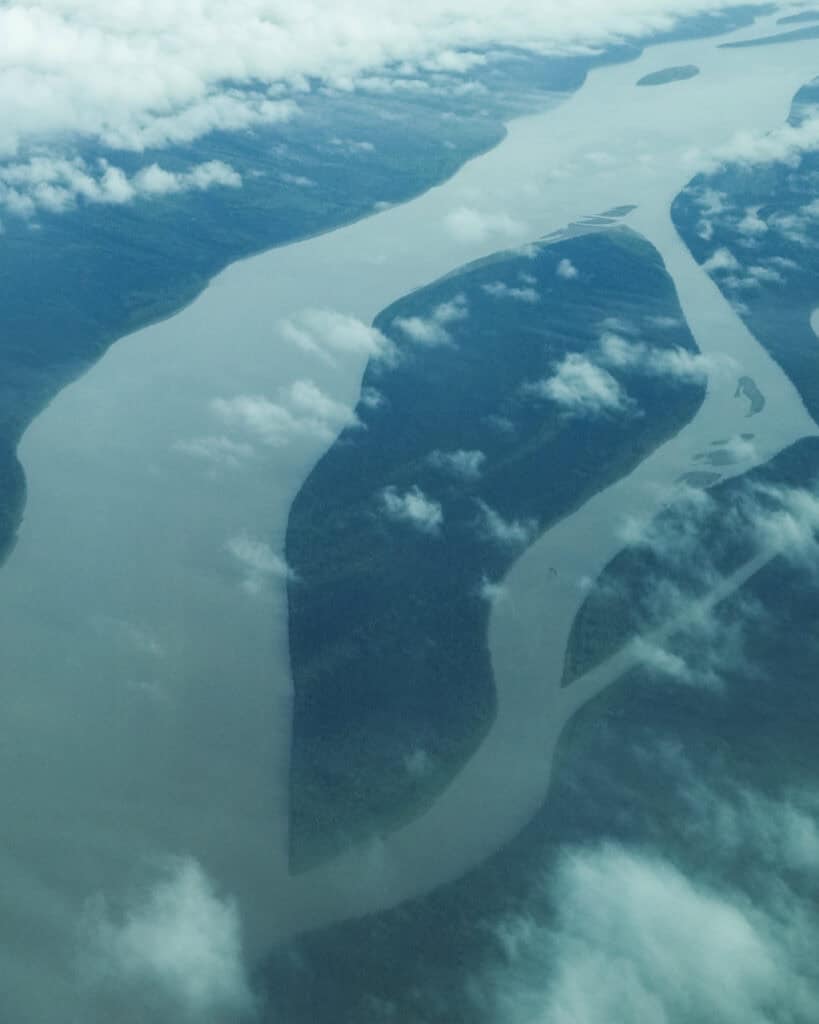
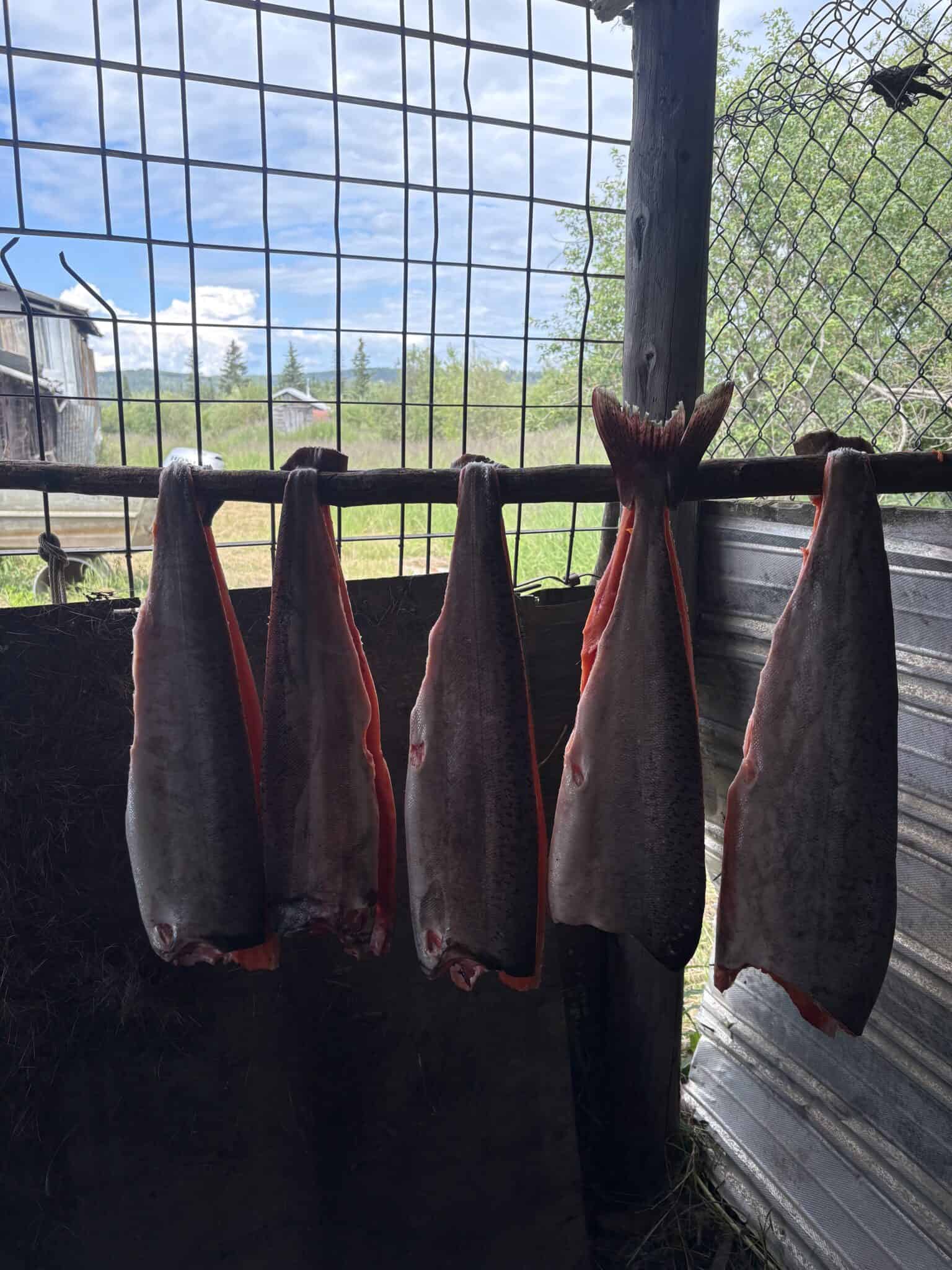
For generations, families on the Yukon River have survived on the summer abundance of wild salmon: our staple food source, our cultural heritage, our economic backbone, our relatives. In fact, the earliest known human use of salmon in North America dates back 11,500 years to the people of the Tanana River, a major Yukon tributary. For 7,000 years before the Pyramids of Giza were built, salmon have been our subsistence, survival, sanity, and sanctity.
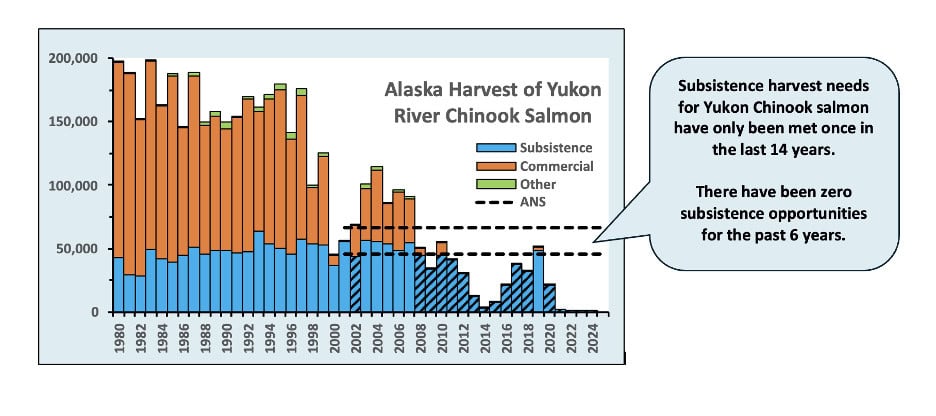
Yet this summer marks the sixth year of no subsistence gillnet harvest opportunities for Chinook salmon on the Yukon River. Subsistence harvest needs for Chinook salmon have only been met once in the past 14 years.
Returns of Chinook salmon assessed in the Lower Yukon from 2021-2025 were 61% less than the long-term average. Chena River stocks – once one of the most productive in the entire watershed – have declined 85% from pre-2000 abundance.
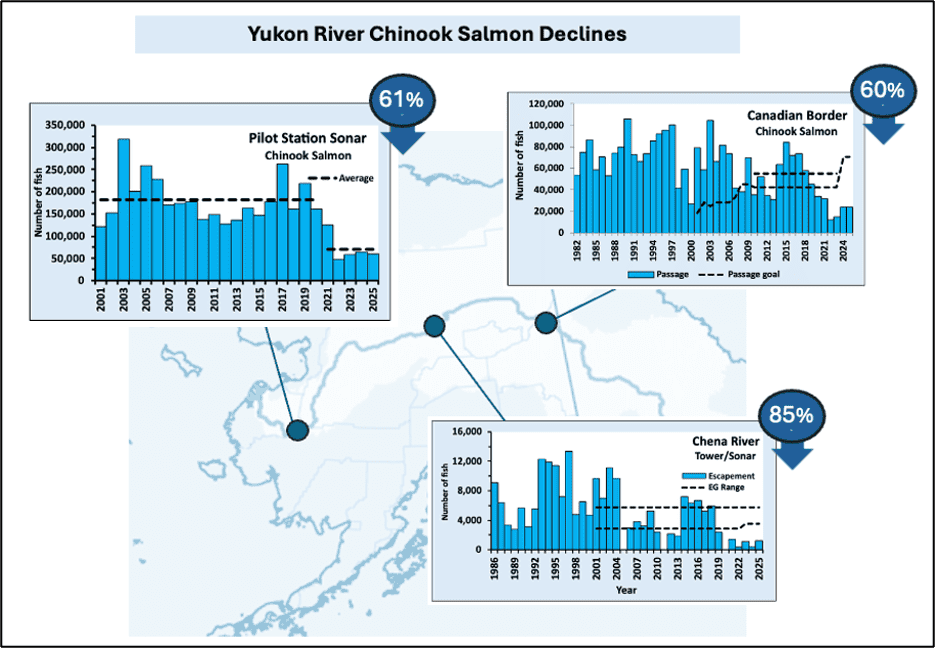
The past six summers have seen failures of the State of Alaska to meet its goals for Yukon River Chinook salmon tributary escapement and treaty-based Canadian border passage. Due to these persistent failures, Alaska Board of Fisheries (BOF) elevated Yukon king salmon from a stock of yield concern, to a stock of management concern. Furthermore, the BOF designated fall chum salmon directly as a stock of management concern, completely bypassing yield concern classification.
Summer chum salmon have fared little better, declining 74% in the Lower Yukon River compared to long-term abundance, and stocks from the Chena River showing 85% declines.
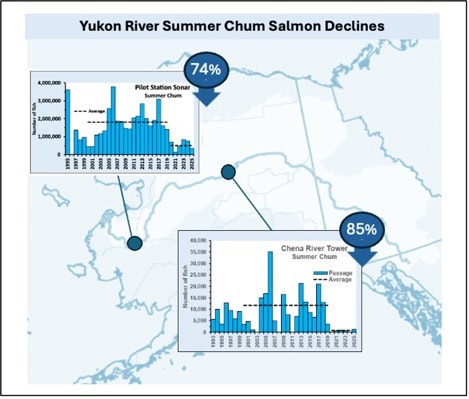
There have been no directed subsistence gillnet opportunities for fall chum salmon between 2020-2023, and no harvest opportunities across the entire Yukon for any managed salmon species in four of the last six years. Minimal harvests of summer chum salmon in 2023 fell far short of meeting subsistence needs, as likely will the selective summer chum fishing opportunities this season.
This multi-year, multi-species salmon disaster threatens to rob an entire generation of Alaska Native people on the Yukon River of the cultural, spiritual, and traditional practices of salmon fishing.
Now, we find ourselves asking the hard questions: What does summer mean without salmon fishing?
What does life on the Yukon River mean without salmon?
What must change to bring our salmon home?
This is Part 1 of a 3-part series on the Yukon River salmon collapse.