Hear Our Stories: The Words of Nels Alexie
We are Salmon People. Hear Our Stories.
Neqet Yukaatkut. Niiciki Qanemciput.
Nels Tseugan Alexie was born at fall and spring camp at Elrivik (a place to eat), inside the Johnson River in the lower Kuskokwim. Mr. Alexie settled down with his wife Katy Green from Eek, Alaska. Together they had four boys and two girls; one child passed away.
Mr. Alexie was hired by the Bureau of Indian Affairs to be a substitute janitor at the Tuntutuliak school in 1967. After 6 months, Nels was recruited as a teacher aide.
In 1969, Nels was hired by the Lower Kuskokwim School District as a teacher aide, after which he was hired as a Yup’ik Education Teacher. He taught language, the history of our people, and arts and crafts. In the 1970s, Mr. Alexie worked to help gather information on the importance of college to the people in the Region, which led to the establishment of the Kuskokwim Community College in Bethel, Alaska.
Mr. Alexie attended college and received a certificate in education in August 1974.
Nels started working in 1975 at the Kuskokwim Community College as a Liaison in Bethel under building maintenance and taught welding, electrician courses, as well as boat and sled making. Mr. Alexie served in the Alaska Army Reserve. He retired in 2011.
Mr. Alexie is currently serving as Traditional Chief at the Association of Village Council Presidents.
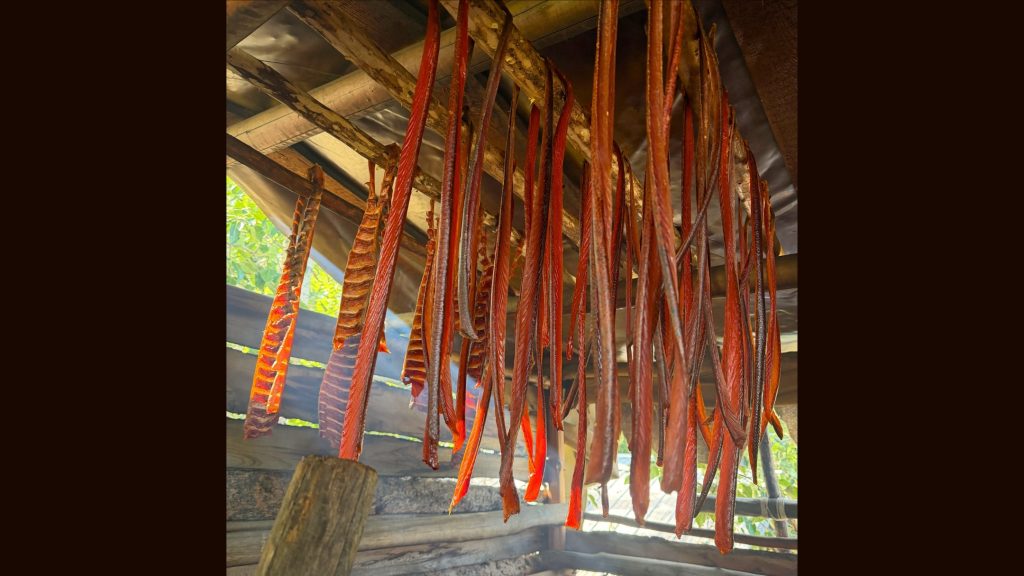
Nels did a lot of fishing, hunting, and trapping in his younger days. He also owned a dog team and sewed his own clothes. He still dries fish at fish camp in summer.
Nels Tseugan Alexie is thankful to have learned the history of his people; having been taught by elders to prepare for his future; and his college education, all of which helped him to take care of his family. One elder gave him advice to work while he can so that he can remember and say what he did when he is older. Today he is thankful for that advice.
Nels’ Words:
Nels Alexie gave testimony on February 8, 2026 at the North Pacific Fishery Management Council’s February full council meeting in Yup’ik.
Council testimony is limited to just three minutes for the general public. Nels had more dialogue and life history to share than what could fit in a short time.
Nels shared this important background to his testimony at the Council, explaining what it means to live his Yup’ik Way of Life:
Igyaraq — the throat, the place where more fish come into the river. The most important places where we are not supposed to fish. Tributary, last passage for the place of their spawning to lay their eggs. I hear some people, Fish and Game, they block one side in order to have an adequate number.
Our people had their own science too. I mentioned this. This old man had said, sit down here and watch these fish, at this eddy under the waterfall. When the old man was young, he was watching, he saw one fish come back, and those other fish in the eddy, they started moving around. After they moved, they started jumping up into the last flat, smooth water, where they could go for their final journey to spawn.
What I have heard from the guy, I have listened to him. He was telling me what he had seen. This is the Native science. That is what we have learned. Sit there and watch those fish over there, that was what I was told, qama’aneq (eddy) one fish jumped up to check the place ahead. One fish who jumped ahead, came back, then the fish started moving. They start to jump up and go.
It’s our science that I have seen and heard and held the way he was told. This is what I mentioned. I am not blindfolded. This is what I see happening.
I thought about that and what I was going to testify about. I thought to myself and talked about our own science. It was mentioned. We have biology too. The fish, the animal, the people. That’s what I mentioned.
Mainly about the Igyaraq — there’s one main channel where they leave to go get fat in the Bering Sea. And it needs to be protected. Going up the stream on the Kuskokwim and the Yukon river, while the [North Pacific Fishery Management Council and] Board of Fish do this, the trawling, that is what I was trying to explain, it is hard to explain in two minutes and three minutes to understand.
A lot of the time I’m being superstitious too. People say, Nels, where did you get this message? I got it from listening to elders. I learned good things and bad things. Some things I don’t tell. Fish on tundra, a slough, a lake, they tell us where the whitefish go into the lake, through the throat, we say not to mess with the throat. The fish know where to go. Any species, you have a place where you enter your own house. Fish have that too.
Once you let those fishers scrape off the bottom what is going to come next? You will not get something back.
In two minutes, I cannot really explain it all, so I will explain it here. What I do is I mention what I have learned and what I have seen or what someone has seen and experienced. I am not blindfolded. I have sat and watched — not just sit for a minute, and leave and come back, but around the clock. Every minute you pay attention, constantly watching. Once you close your eyes for a minute amongst them — the man was told to watch. If you tell the truth you will never be poor. I’ve been fishing all my life. I didn’t start in high school, I’m over 83 now, I started when I started walking. If you don’t do what you like to do, you won’t be able to tell stories.